
Image

It may well be the only occasion during a student’s law school career literally to “practice” law.
In a clinic, students represent actual people and work on actual cases. They advocate in court, counsel clients, conduct fact investigations and mediate disputes.
Students not only must think like a lawyer, as they are asked to do in most law school classes, but also act like a lawyer.
The experience is both deeply challenging and immensely rewarding. Most students who take part in a clinic look upon their participation as the highlight of their legal education, an experience which enables them to approach the practice of law with confidence and sensitivity.
Individuals interested in learning more about the services of the Hofstra Law Clinic, or to inquire about representation should contact (516) 463-5934 or lawclinic@hofstra.edu.
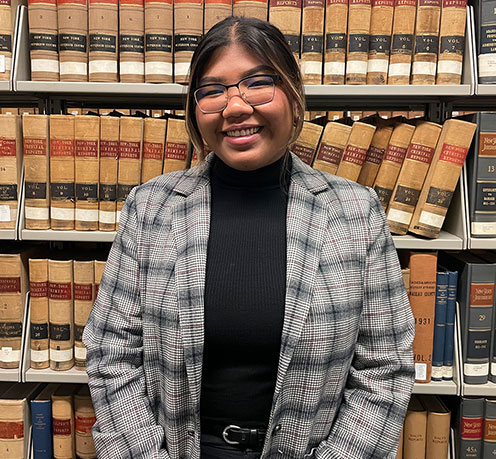
“Not everyone gets to say they’ve been in court prior to finishing law school. I think that experience has been worth the most to me because before coming to law school, I thought that idea would be so scary but now being able to say that I’ve done it, it’s been a great experience.”
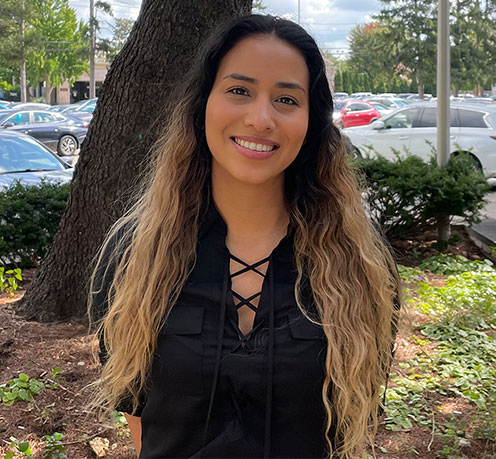
“I got to continue my work with the clients, I got to touch such a different variety of topics within immigration that I never would of thought.”

“I think it’s an experience that students get that you won’t get in any other capacity after you graduate, so it’s a wonderful opportunity. It’s an opportunity to test your own skills, your own ambitions and to also test what type of law you may want to practice.”

"Participating in the Community & Economic Development Clinic under the supervision of Professor Haber has by far been the most rewarding experience in law school. The clinic has helped me build my confidence in representing a client."
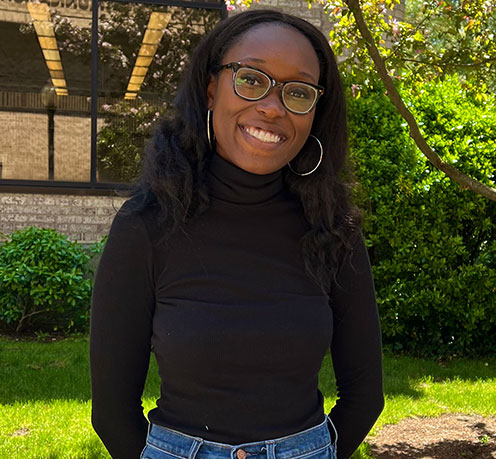
“I learned that the answer is not directly in front you all the time and sometimes you have to grab at a bunch of things and be creative. I think that is something that’s invaluable that I’m definitely going to use as a practicing attorney.”
Image
The Hofstra Law’s Clinical Program began more than 40 years ago in a second-floor walk-up above a fish store in the center of Hempstead. Hofstra Law was a pioneer in fully integrating clinical education into a law school and by the late 1970s had one of the largest clinical programs in the nation.
At first, Hofstra Law faced resistance and skepticism among practicing attorneys who were concerned that students would take cases away from them or would not be able to handle real cases and clients.
Even after the clinic won the right to represent clients in court through a Student Practice Order in 1972, some judges would not allow students to appear before them.
Over the years, however, the clinic has become a well-known, at times notorious, presence in legal circles in Nassau and Queens.
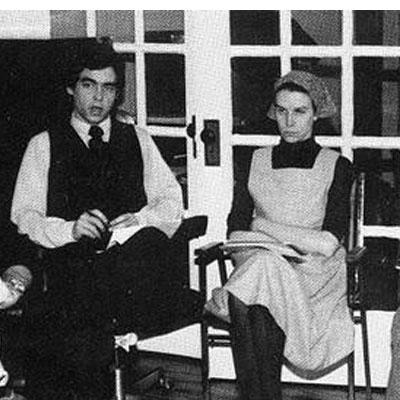
The clinic moved from the fish store to a trailer, and then in 1997 to its current site in Joan Axinn Hall. This permanent, state-of-the-art facility, made possible through the generosity of Joan Axinn ’76 and her husband, Donald, has greatly enhanced the clinic’s operations.
The clinical mission, however, has stayed the same: teaching students lawyering skills and analytic methods through the provision of quality legal representation to clients in need.
Our core mission is to provide every Hofstra Law student with the opportunity to develop into a skilled, passionate and ethical lawyer while serving the legal needs of local disadvantaged individuals and communities.
To accomplish this goal, we treat our clinical program as a laboratory. We push each other and our students to think deeply about the spectrum of new and creative approaches to our clients’ problems. We challenge ourselves not just to provide the experiences of an actual law practice to our students, but to teach them how to learn from those experiences, and how to translate the knowledge they have gained in their non-clinical law school courses into client representation.
We reflect rigorously not just on what we teach, but on how we teach, as well. We are an interactive and collaborative faculty that, through robust critique and analysis of ourselves and each other, constantly explores and assesses the effectiveness of the teaching methods we use. We seek to incorporate relevant and empirically sound research on teaching and learning into our evaluation of those methods. And we aspire to bring the clinical methodology and best teaching practices that we develop to curricular and teaching innovation throughout the law school.
Finally, we teach by example. We make an impact — locally, nationally and internationally — in areas that affect the representation of underserved populations, and we encourage our students to make that type of impact one of their goals as they enter the legal profession.
Each semester the Clinic Office will publish the date for our Open House and make our on-line application available a few weeks before course registration begins. Once the on-line application is available, you should do the following to apply:
REMEMBER THAT ENROLLMENT IN ALL CLINICS IS LIMITED TO STUDENTS WHO HAVE COMPLETED THREE FULL-TIME SEMESTERS OF LAW SCHOOL.